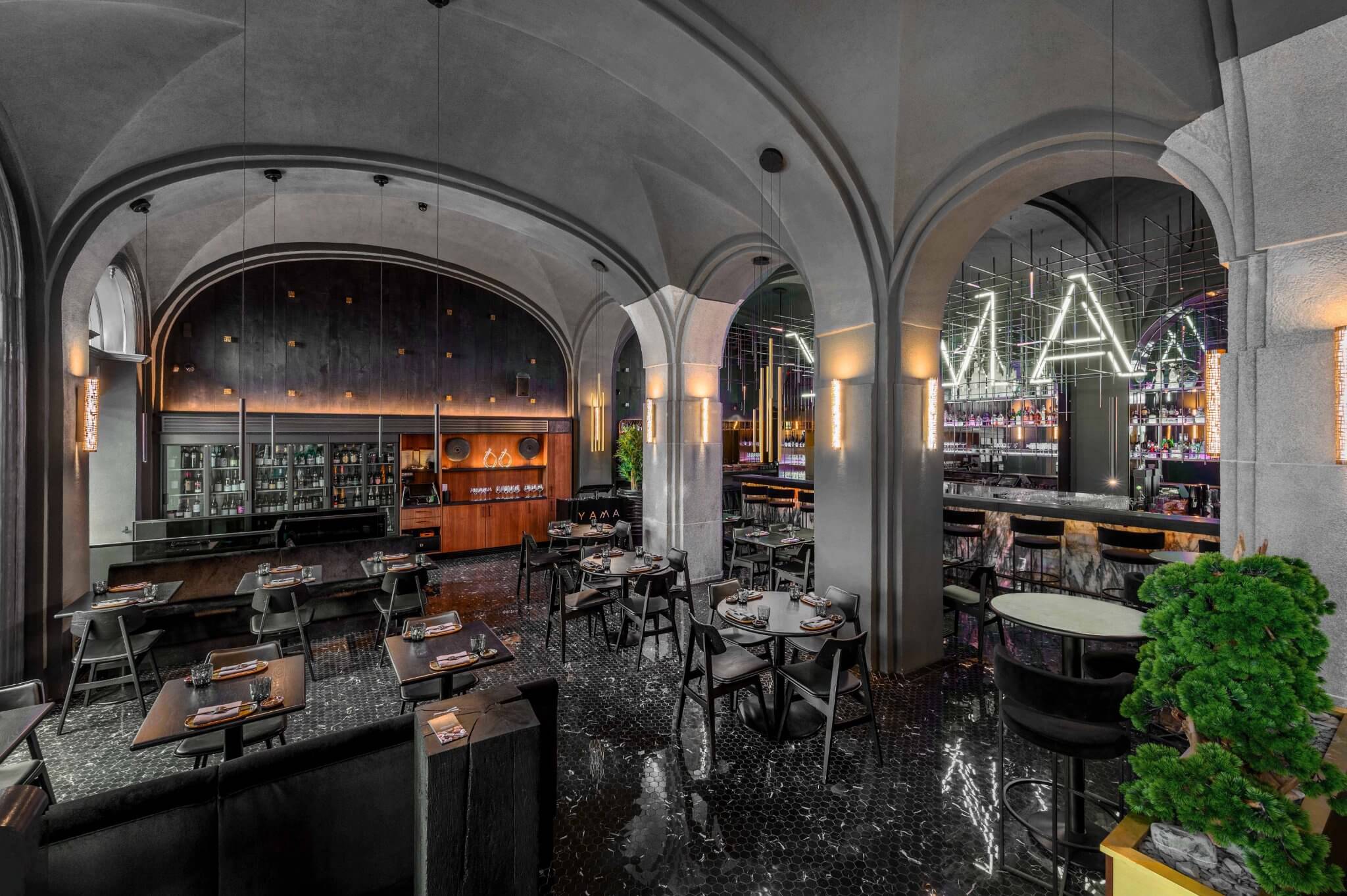
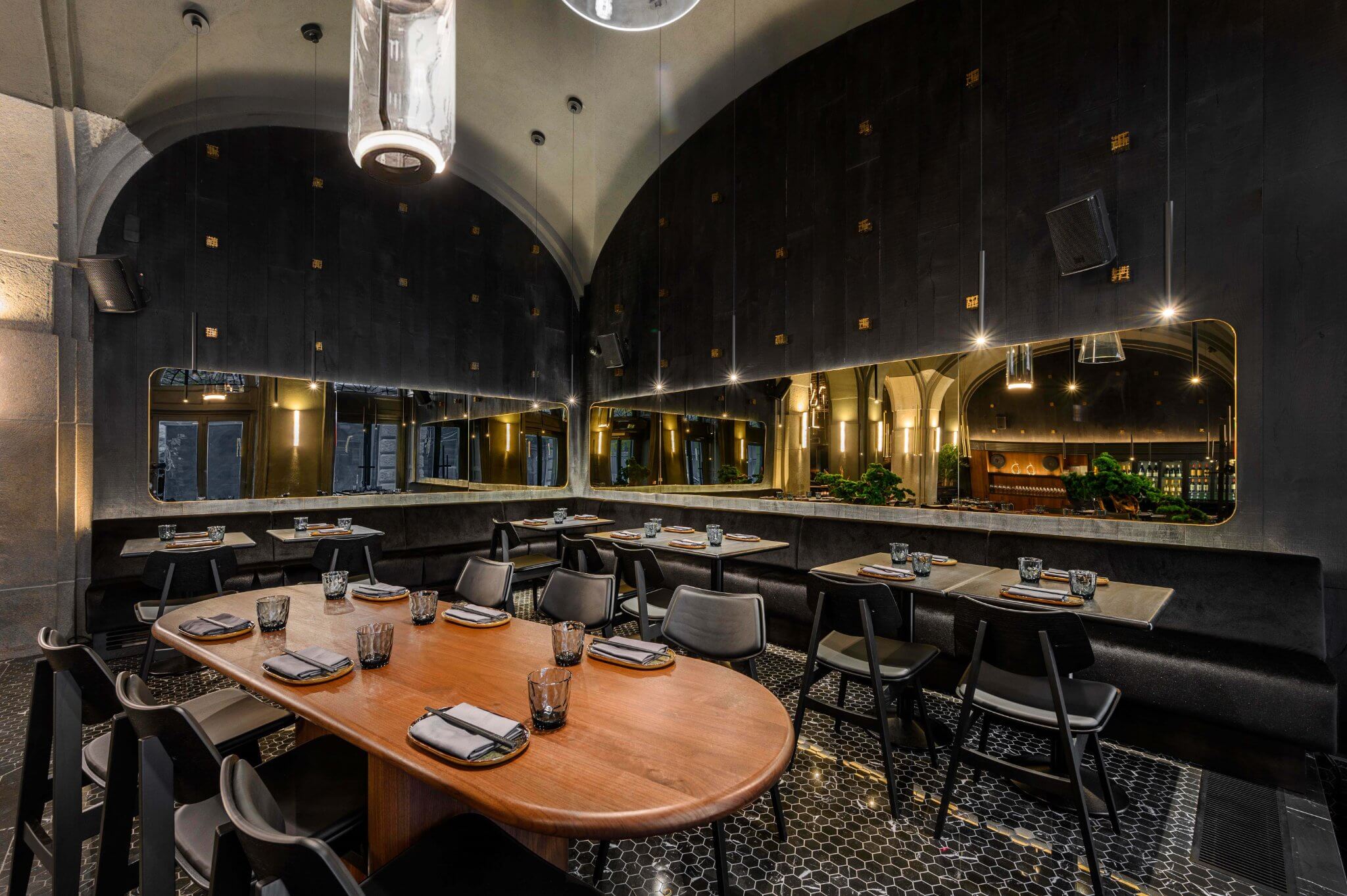
The architectural realisation of YAMA Budapest offers a refined yet multi-layered spatial experience, harmoniously blending the philosophy of Japanese minimalism with cutting-edge contemporary design. Set within one of Budapest’s most distinguished districts — just steps from St Stephen’s Basilica — the restaurant occupies the ground floor of an 1876 neoclassical apartment building. Executed by Market Építő Zrt., and based on a design concept by Ákos Bara and the BAD Design team, the interior not only elevates the gastronomic experience but also introduces a renewed approach to spatial composition and visual expression. Beyond its role in Asian fusion cuisine, YAMA Budapest presents a fresh architectural direction, crafting an atmosphere that is both distinctive and perfectly balanced.
Guided by the principle that “less is more”, the designers focused on the proportions of space, natural materials and the subtleties of fine detailing. The dark-stained timber and copper surfaces impart warmth and sophistication, while the marble-effect floor and wall finishes, expressed in varied forms, reinforce the clarity of the space. A standout architectural feature is the backlit stone surface at the counter front, which offers not only visual intrigue but also a dynamic interplay of light. This element ensures the atmosphere shifts throughout the day, allowing the space to reveal a different character with each visit.
The layout and lighting of the space perfectly match the Japanese design philosophy. During the day, it offers a calm, intimate environment that is ideal for business meetings or gatherings with friends, while in the evening, its subtly composed lighting and elegant atmosphere bring the fine dining experience to the fore. YAMA Budapest is not just a restaurant, but a contemporary architectural creation that combines the sophistication of Japanese culture with design innovations. The outcome is a sensory experience in which gastronomy, architecture and ambience together leave a lasting impression.