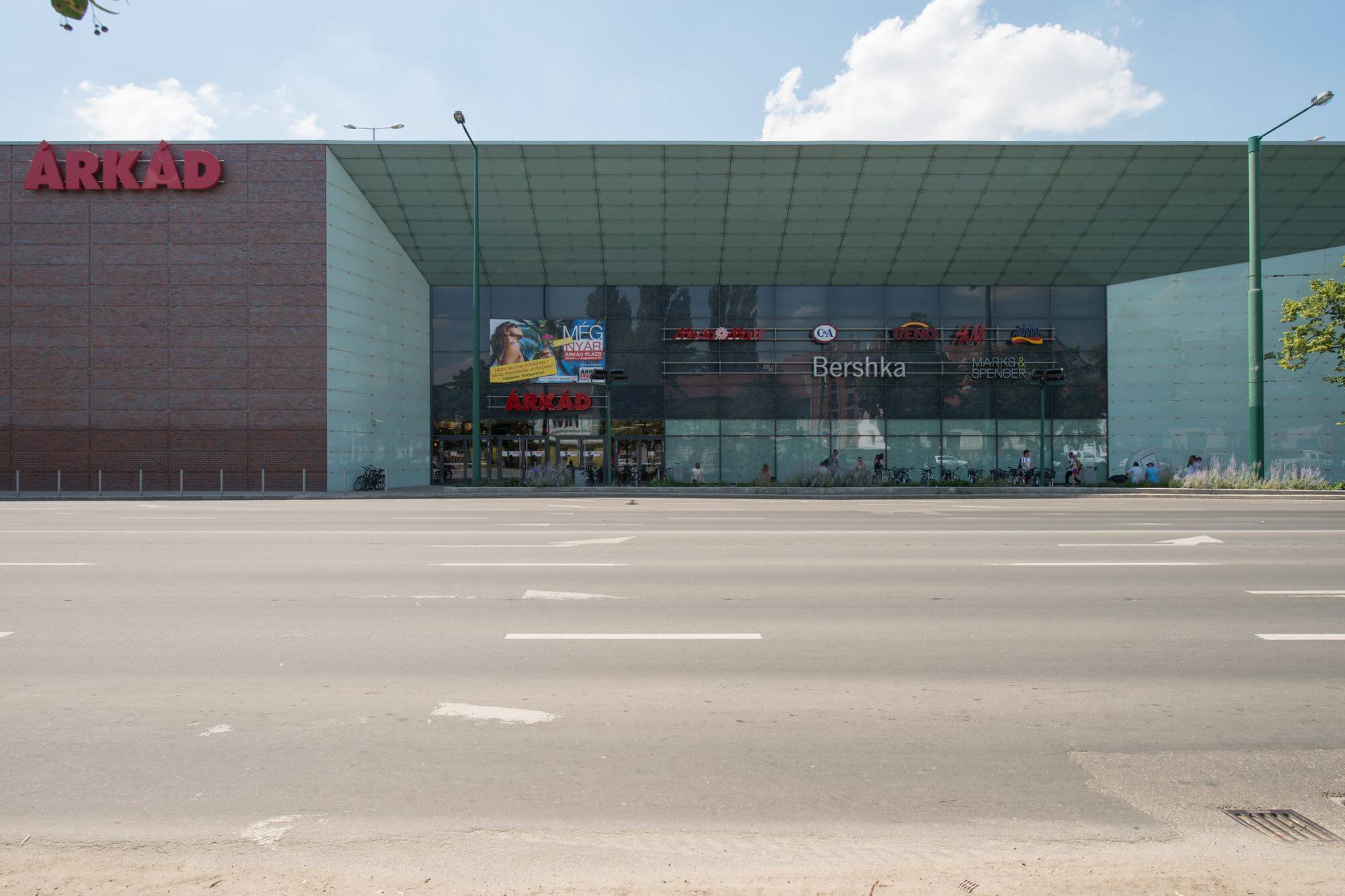
The Árkád Shopping Centre in Szeged, realised on the former site of the First Hungarian Hemp Spinnery Company, was completed on the basis of the architectural and interior design of 3h Építésziroda Kft., with Market Építő Zrt. acting as general contractor. The project aimed to create a contemporary retail complex that embeds itself within the urban fabric while retaining a distinctive architectural identity, preserving Szeged’s industrial heritage and responding to twenty-first-century expectations of retail, community and architectural quality.
The building’s massing and materiality are governed by a dialogue between past and present. Brick, employed as the principal façade material, references the traditions of the former factory, while lending the structure a monolithic and dignified presence articulated through the language of contemporary architecture. The façades are rhythmically punctuated with glass and aluminium elements that soften the mass and bring dynamism to the exterior of the building. The main façade faces the city centre; its sculptural entrance is defined by the contrast of matte brick and reflective glass, bestowing the building with a unique yet understated character.
Central to the interior organisation is a full-height atrium, functioning both as the principal circulation spine and as the primary source of natural light. The space is shaped by the varying intensity of light, the texture of surfaces, and the bridges that connect the upper levels. The floating white cylindrical form of the central rotunda constitutes the spatial focal point of the composition, directly linked to the first-floor food court. Interior materials remain restrained: Jura limestone flooring and light wall finishes provide a balanced backdrop to the visual diversity of the commercial units.
The design placed particular emphasis on preserving the spirit of the place and presenting its industrial past through a contemporary lens. Restored hemp-spinning machinery and period photographs displayed within the public areas evoke the history of the former factory, ensuring the building embodies not only functional but also cultural significance.