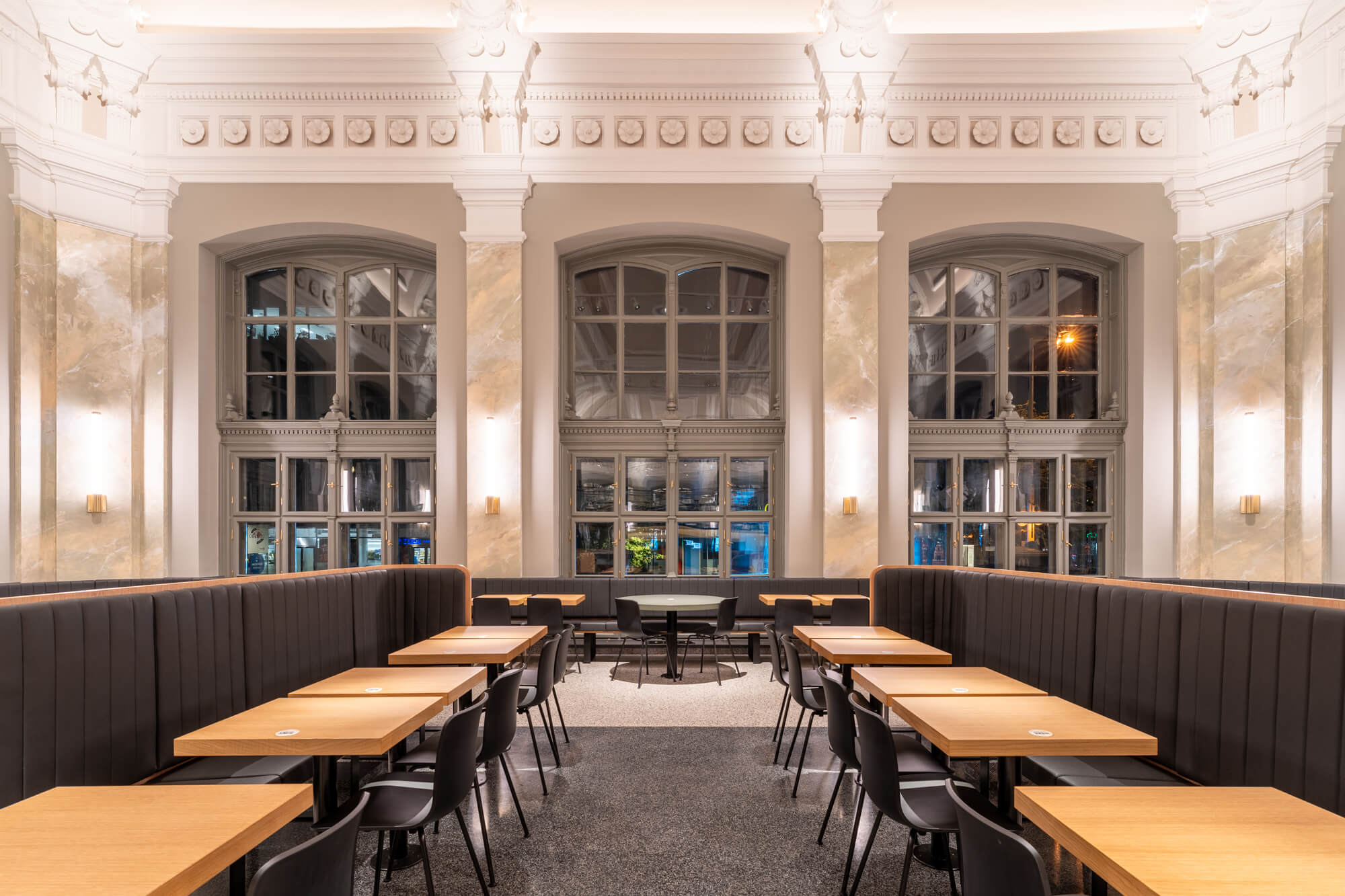
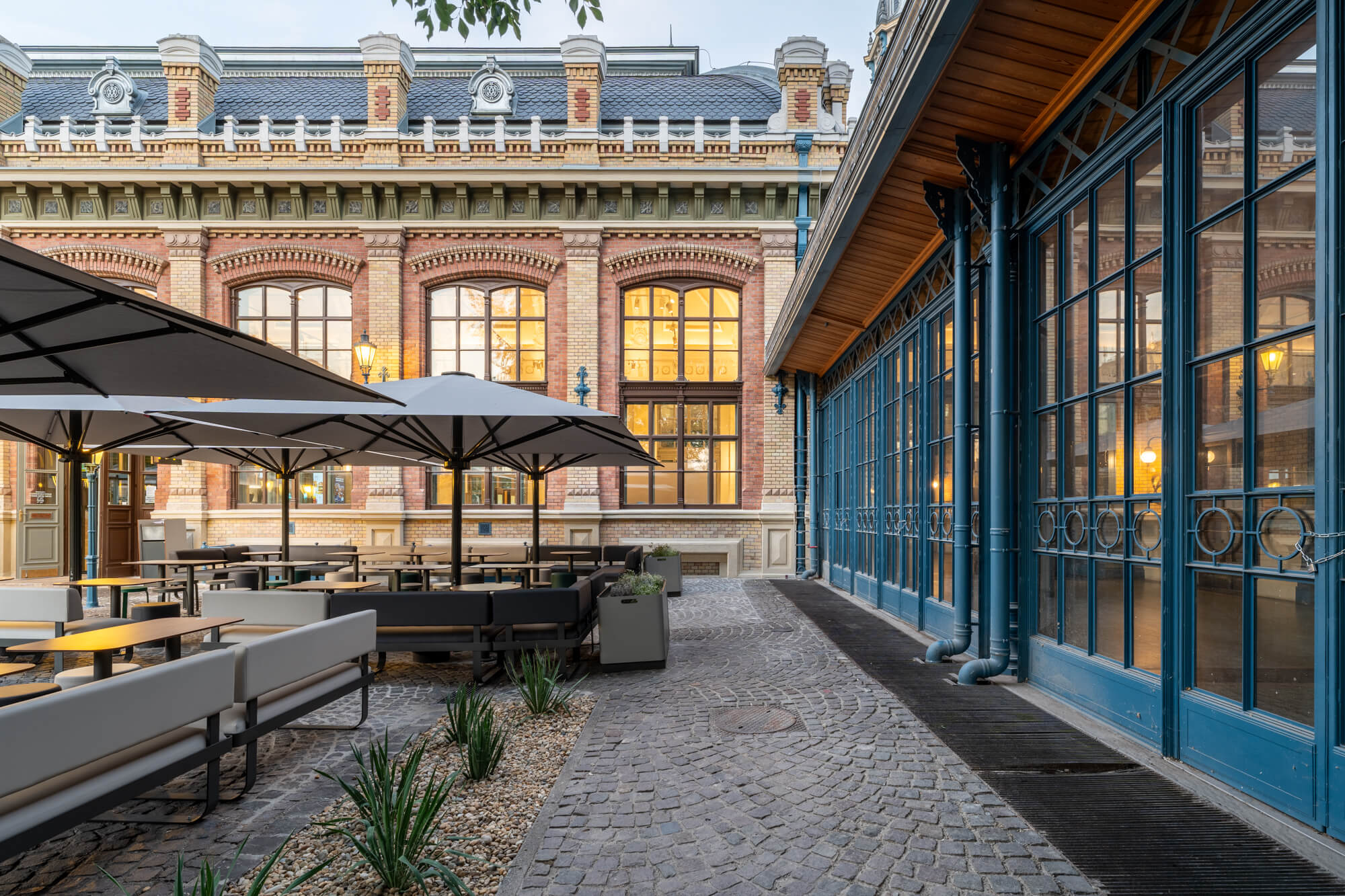
Opened in 1990 as the second McDonald’s in Hungary, the Nyugati Square restaurant soon became known as one of the chain’s most impressive establishments, and has repeatedly been listed among the world’s most beautiful McDonald’s locations. Following more than six months of renovation, the restaurant reopened in August 2024 in a fully modernised form, while the historic building’s heritage values were meticulously preserved.
The project was designed by the Australian design studio Landini, and the planned concept was adapted to the building’s characteristics by Hungarian interior designer Géza Sass. The construction works were executed by Market Építő Zrt., ensuring the technical and aesthetic quality of the renovation.
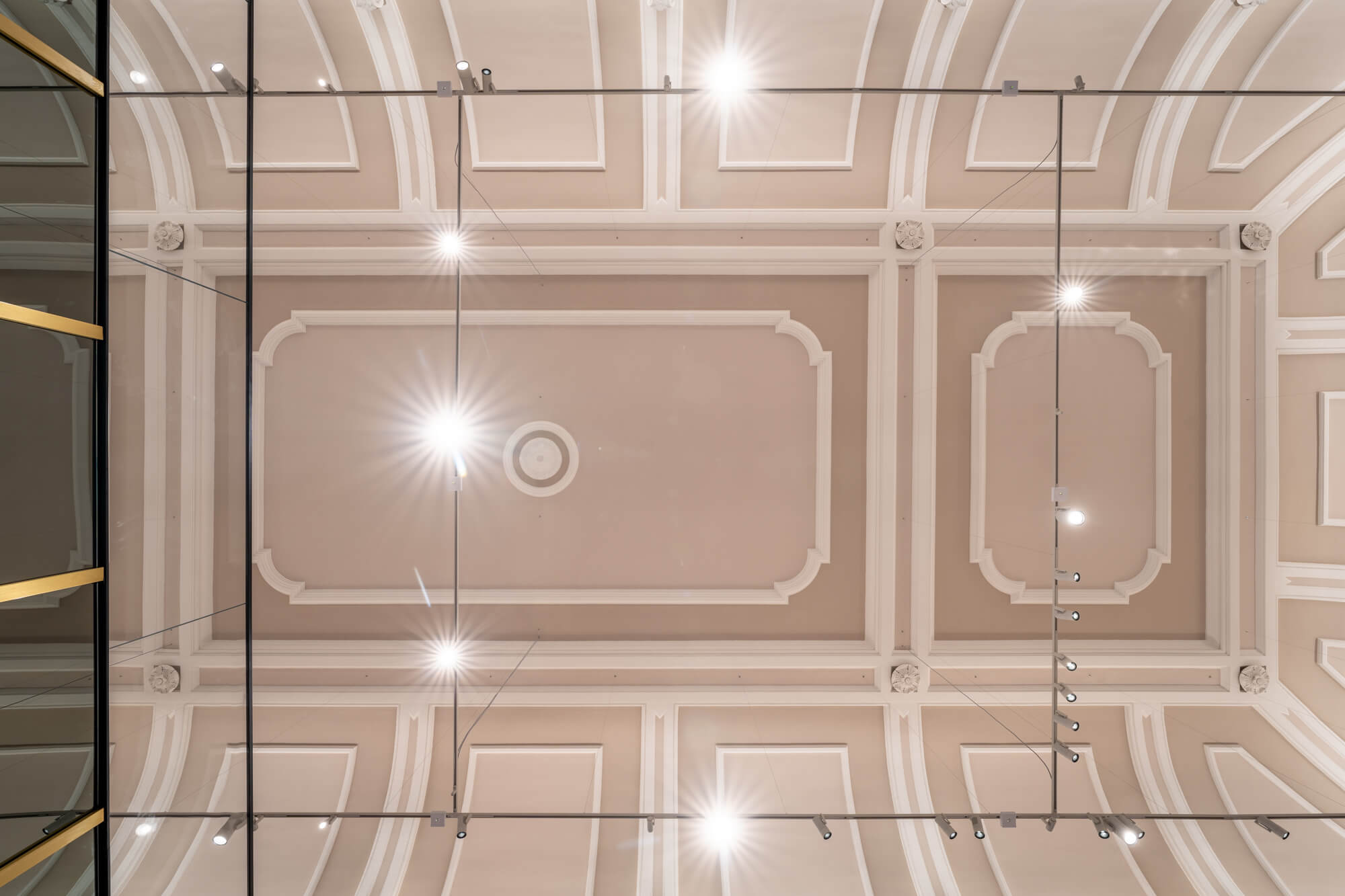
Directly connected to Nyugati Railway Station, the building features Neo-Renaissance and Neo-Romantic architectural elements. Its transformation marked the final domestic milestone of McDonald’s global restaurant-modernisation programme. Throughout the project, particular care was taken to ensure that the primary structural walls, façade features and interior architectural details retained their original character. Authentic, natural building materials were employed during the restoration, alongside several solutions considered unique even within the global McDonald’s system.
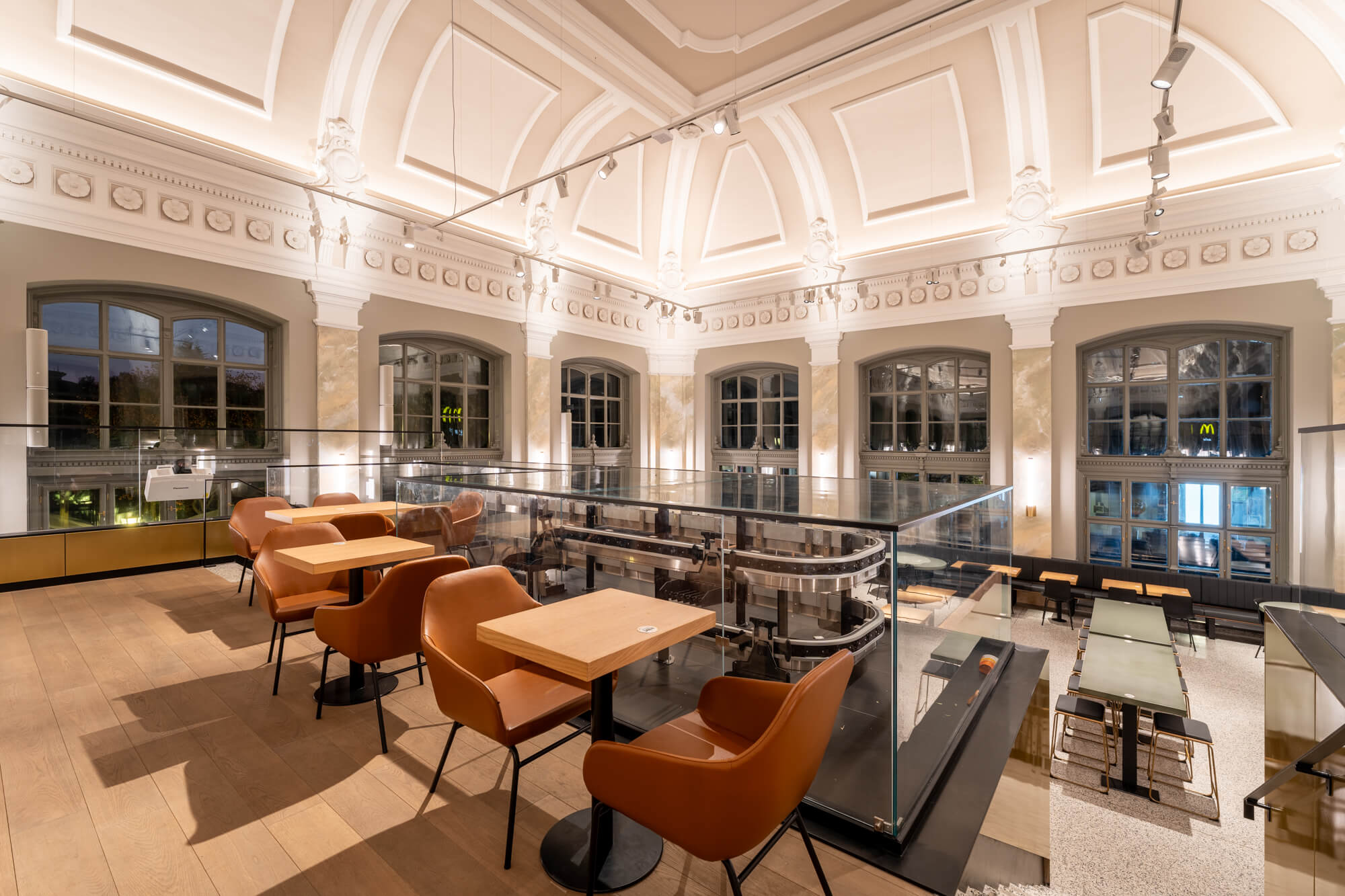
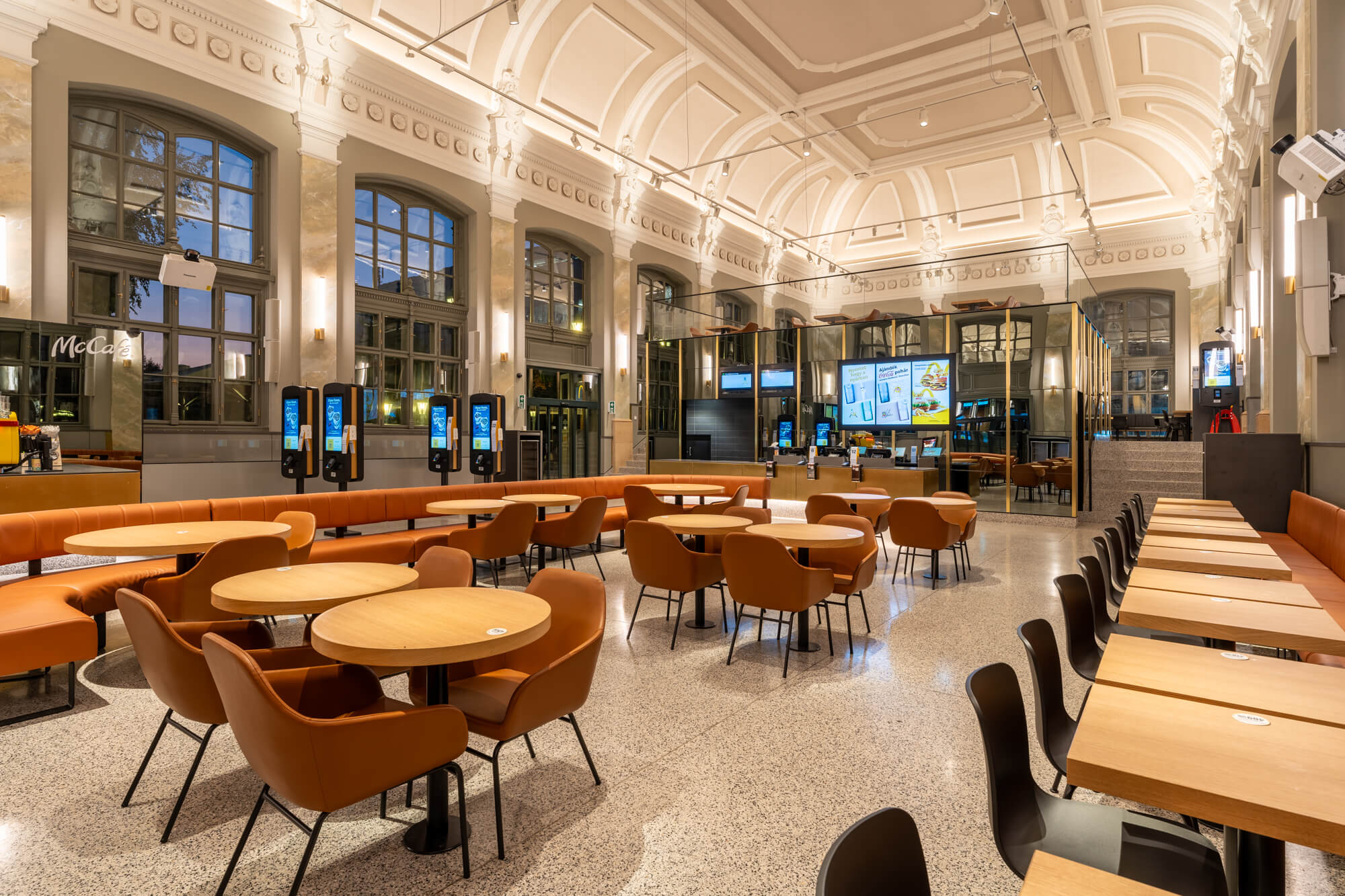
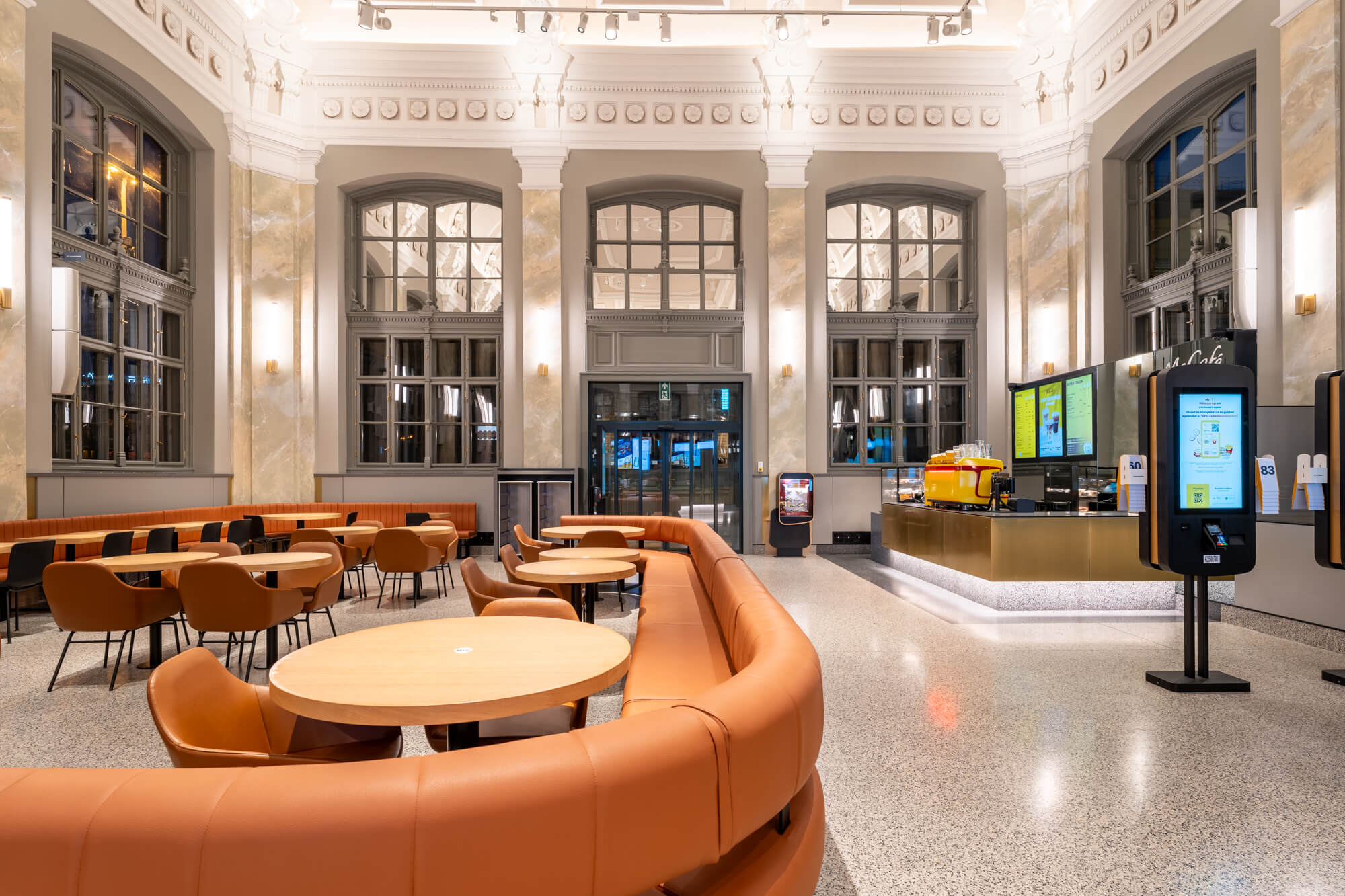
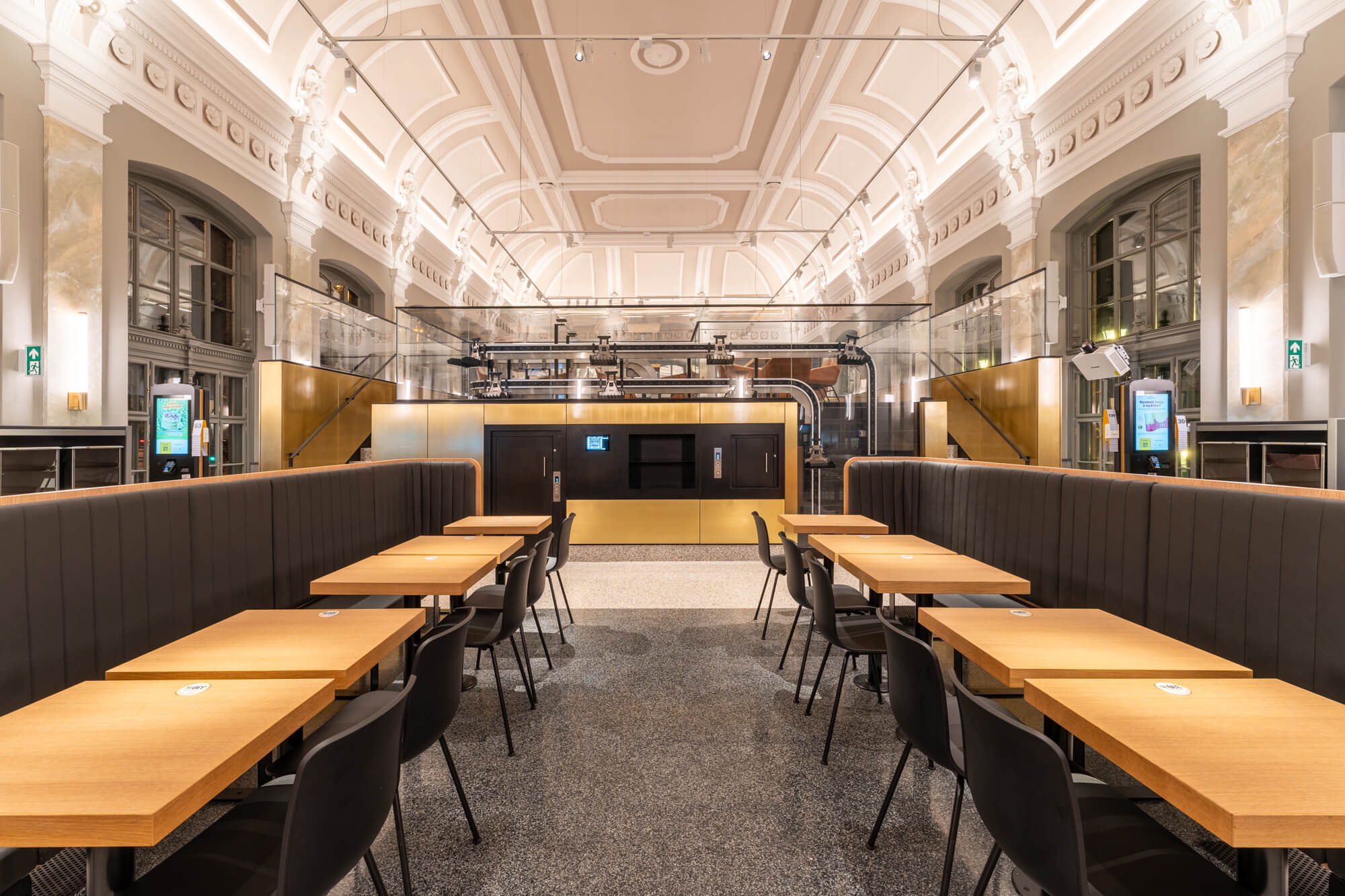
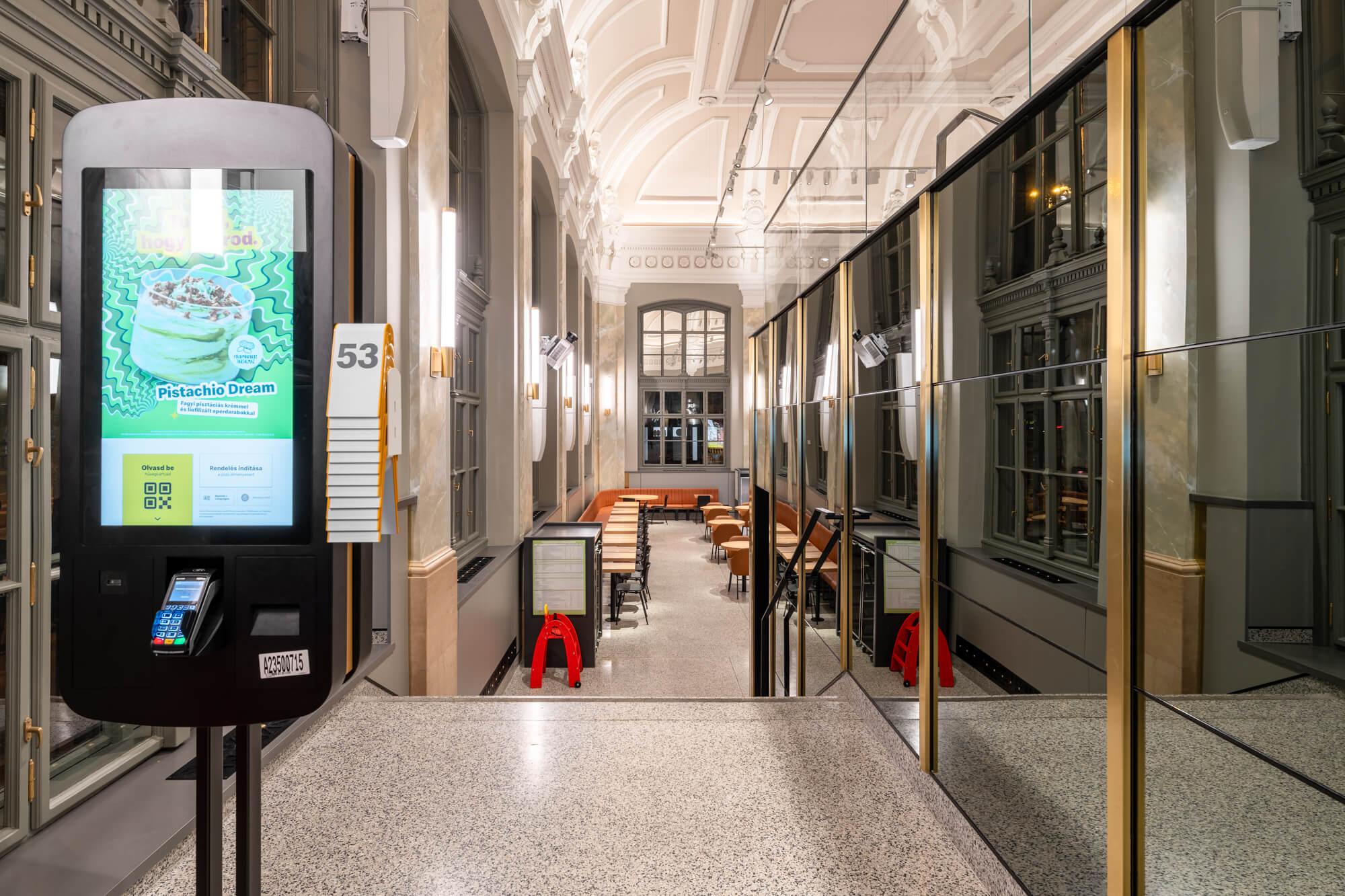
To enhance the guest experience, the renewed restaurant was completed in line with the modern “Experience of the Future” concept. As part of the digital upgrade, touchscreen kiosks complement the traditional tills, while guests may also place their orders via the McDonald’s mobile application and have them delivered directly to their table. A special highlight is the food conveyor belt which, uniquely within Hungarian McDonald’s restaurants, transports products between the kitchen’s two levels – allowing guests to follow the journey of their sandwiches through a glass enclosure.
During the interior design work, we paid special attention to preserving the building’s past and original character, while also applying McDonald’s global RAY design concept, named after the company’s founder, Ray Kroc. Unique design elements include mirrored glass surfaces, copper-clad lamps and special furniture, all of which contribute to the restaurant’s unique, modern atmosphere.
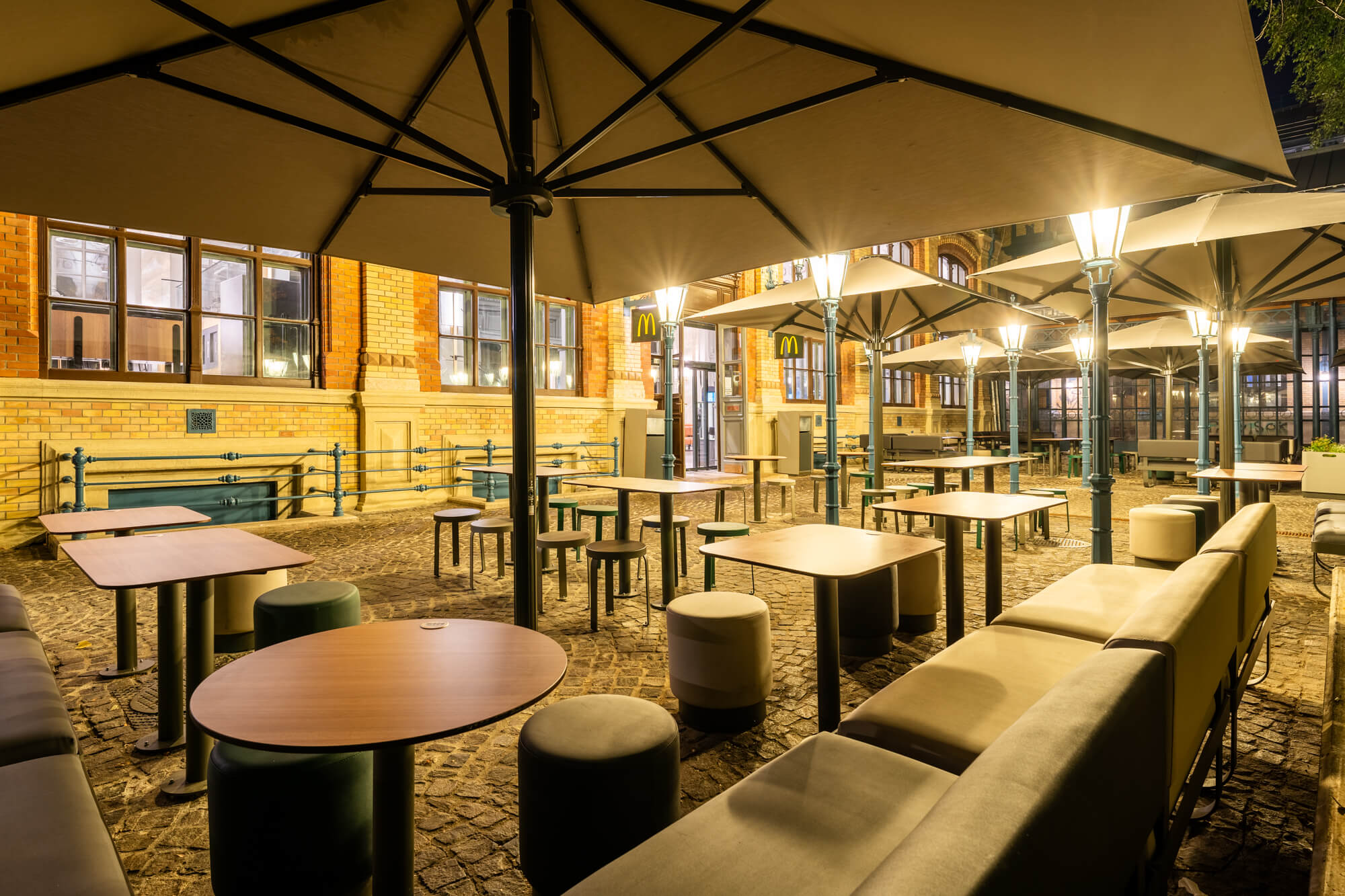
The use of natural materials in the interior – such as cast terrazzo flooring, timber, leather and brass cladding – adds a distinctive layer of quality rarely seen in fast-food environments. The decorative wall paintings also warrant attention, having been restored by a specialist conservation team to safeguard the atmosphere and spirit of the period. The restaurant’s gallery arrangement has likewise been reimagined: visitors now ascend to the mezzanine via a centrally located staircase, and the former terraced layout has given way to an open, transparent spatial experience. The outdoor area has also been redesigned with contemporary furniture and a lounge-style terrace, providing an ideal setting for relaxation and social interaction.